Storm Claims Highlight Cover Gaps for Home Service Operators
Severe weather response shows why mobile and home-based businesses need clear records, limits and claim plans
The information on this website is general in nature and does not take into account your objectives, financial situation, or needs. Consider seeking personal advice from a licensed adviser before acting on any information.
The Insurance Council of Australia’s Significant Event declaration for severe storms affecting Queensland and parts of New South Wales since 11 November 2026 is a timely warning for domestic and home service businesses.
By 16 November, insurers had received 4,670 claims, mainly for fallen trees and branches, damaged roofs and fences, and water entering homes.
While most of those claims will be household-focused, the same weather can quickly disrupt cleaners, gardeners, maintenance providers, mobile technicians and other operators who depend on safe access to clients’ properties.
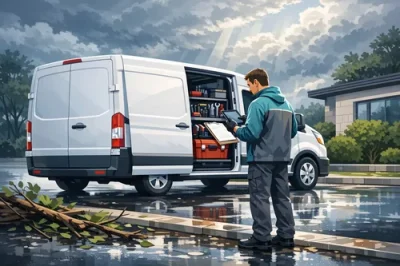
The immediate insurance issue is not only whether a business premises has been damaged. Many home service operators work from a residence, store tools in vehicles or garages, rely on booking software, and move between suburbs where roads, power and customer availability can change by the hour. A storm can therefore create several exposures at once: damaged equipment, cancelled jobs, unsafe work sites, delayed staff movements and disputes about who is responsible for damage that occurs during clean-up or repair work.
For small operators, the practical lesson is to separate household insurance from business risk. A standard home policy may not automatically cover business stock, specialist tools, client property exposure or income lost after an interruption. Likewise, commercial policies can include limits, exclusions, excesses and evidence requirements that only become obvious during a claim. Operators who keep tools at home or in a vehicle should check whether cover applies at those locations, in transit, overnight and during severe weather.
Storm recovery also brings liability risks. A gardener clearing branches, a cleaner entering a water-damaged home or a handyman completing urgent make-safe work may be operating in conditions that are very different from a routine appointment. That makes safe work procedures, photographs, job notes and clear client instructions important. Where work involves accidental injury or property damage exposure, public liability insurance may be relevant, but it still needs to match the actual services performed.
Business continuity deserves equal attention. Even when tools and vehicles are undamaged, operators may lose work if clients postpone visits, local roads are closed or power-dependent services cannot proceed. Some policies may include business interruption cover, but triggers and waiting periods vary. A short outage, for example, may not be treated the same way as physical damage to insured property.
Before the next severe weather warning, home service businesses can use this event as a checklist prompt:
confirm where tools, equipment and supplies are covered;
review whether home-based business activities have been disclosed;
keep receipts, serial numbers, photos and maintenance records;
document cancellations, access problems and storm-related costs;
avoid starting urgent work where site safety is unclear.
The Significant Event declaration should help insurers coordinate their response, but it does not remove the need for policyholders to prove loss and meet policy terms. For domestic service operators, preparation remains the difference between having insurance in place and being genuinely claim-ready.
Please Note: We do not endorse any specific products or companies. Some content is sourced from third parties, including press releases, and may not be independently verified for accuracy or completeness.
A newly published Life Code Compliance Committee sanction has highlighted a practical but often overlooked issue for Australians relying on personal insurance: having a claim accepted is not the same as receiving every benefit correctly calculated and paid. The de-identified case, published on 16 November 2026, concerned an unnamed life insurer that underpaid about $1.6 million, including interest, across 66 income protection and death benefit claims. - read more
A NSW parliamentary inquiry into the state of live music has put public liability insurance back in the spotlight for venues, festivals and event operators, after its final report identified insurance affordability as a significant operating pressure and recommended further work on reform options. - read more
A NSW parliamentary inquiry into the state of live music has put insurance affordability back in the spotlight, with its final report tabled on 9 November 2026 identifying public liability insurance as a major cost burden for venues and festivals. The recommendation does not change premiums immediately, but it gives business owners a useful signal: governments, insurers and industry groups are still grappling with how public-facing risks are priced, documented and managed. - read more
The Insurance Council of Australia’s expanded Significant Event declaration for severe storms in Queensland and New South Wales is a timely reminder that insurance is tested in the messy aftermath of damage, power loss and disruption, not just at renewal time. By 17 November 2026, insurers had received more than 7,500 claims linked to severe weather from 11 to 17 November, with damage ranging from torn roofs and broken fences to water entry, hail impacts and spoiled food after outages. - read more
A recent business interruption dispute involving a bakery has given restaurant and cafe operators a timely reminder that disruption does not always start inside the insured premises. The Australian Financial Complaints Authority found in favour of a bakery retail business after its insurer declined a claim linked to a fire at the premises of its sole supplier, bringing supplier-dependency wording into sharp focus for hospitality businesses that rely on specialist producers, central kitchens, roasters, wholesalers or delivery partners. - read more
Life insurance premiums in Australia can vary widely because insurers assess personal, policy and underwriting factors differently. This guide explains the main cost drivers, including age, health, smoking status, occupation, cover amount, premium structure and policy options. - read more
The horizon of the insurance industry has undergone a transformative shift with the advent of digital technology. With a few clicks, consumers can navigate the once-complex world of insurance policies from the comfort of their home. The digital landscape for insurance services offers unprecedented access to information, comparisons, and instant communication, fostering a more empowered insurance client. - read more
The digital age has fundamentally transformed how we approach almost every aspect of our lives, including the way we shop for life insurance in Australia. Gone are the days when one had to schedule meetings with insurance agents or flip through pamphlets to understand life insurance policies. Today, obtaining life insurance quotes online has become the norm, offering a hassle-free and incredibly accessible platform for individuals to safeguard their financial future. - read more
Life insurance is a crucial consideration for middle-aged to older Australians. It provides financial security for your loved ones in the unfortunate event of your death. Understanding the various options available is vital to making an informed decision. - read more
The financial fabric of our lives consists of both planning and safeguarding against the unforeseen. Trauma cover, a lesser-known but crucial aspect of personal insurance, provides this protection by offering a lump sum payment upon diagnosis of specific serious illnesses or injuries. In the tapestry of financial planning, it acts as a vital safety net, ensuring that unexpected health crises do not lead to monetary distress. - read more
Start Here !
Apply now for your free Insurance assessment and price comparisons!
Knowledgebase
Peril: A specific risk or cause of loss covered by an insurance policy, such as fire, theft, or flood.



No comments yet. Be the first to share your thoughts.